
- Top de Portugal
- Guide Alcácer do Sal
- Attractions
- How to get there
- What to do
- Guide Lisbon
- Portugal FR | BR | ES | IT | DE | NL
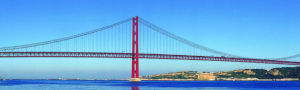
Guide to Lisbon
The capital of Portugal is located in Estremadura, Central region.Highlighted:
+ Old Lisbon
+ Lower Lisbon
+ Where to eat
+ Where to stay
+ Alfama
Find out more in the+ Lisbon Guide




What's New
When one thinks of Portugal, the images that come to mind are the Belém Tower, in Lisbon and, in the north of the country, the D. Luís Bridge, in the city of Porto.+ Lisbon
+ Porto
Other highlights:+ Cascais
+ Braga
+ Coimbra
+ V.N. de Gaia
+ Sintra
Check it out on Guide to Portugal!
Guide to Alcácer do Sal
Alentejo Litoral
Land of Olive Oil, Pinhão and Good Wines
The municipality of Alcácer do Sal, divided into 4 parishes, is one of the 13 municipalities do District of Setúbal. Alcácer do Sal is located in the west of the Alentejo Region, sub-region Alentejo Litoral.It should also be noted that Alcácer do Sal is the largest producer of pinhão in Portugal and one of the most important in the world. Find out more: Alcácer do Sal, the Land of pinhão

The Salinas of Alcácer
The City of Alcácer do Sal is located on the right bank of the Rio Sado (image above). Further on, on top of a hill, its medieval castle bears witness to glorious times and struggles between the Christian conquerors and the Moors, from which it was definitively liberated at the beginning of the 13th century.Since ancient times, Alcácer do Sal has been one of "the most important cities of inner port of the Peninsular West and known for the salt manufacture, added to its toponym, and by the fish salting and paste industries" [Visit Portugal].
Alcácer do Sal, seat of the Military Order of Santiago
Formerly a Roman village, "Alcácer was the capital of the province of Al-Kasser. The walls of the old fortification were reinforced and the Muslim city was protected by two fences, whose walls crowned by 30 towers formed one of the largest bastions of defense of the Iberian Peninsula. Even so, in 1217 it would be conquered by King D. Afonso II, with the help of of the Crusaders who landed here on their way to Syria and the Holy Land, and was handed over to the government of the Order Militar de Santiago, which was based here" [Idem].
Alcácer do Sal
Located 93 km southeast of Lisbon, in the City of Alcácer do Sal, in just over a one hour trip, we leave behind the hustle and bustle of the capital of Portugal and immerse ourselves in the air and landscapes of Alentejo, which here is called Alentejo Litoral."Between the River Sado and the Castle, Alcácer winds along the hillside with great views and an appreciable heritage to discover.
How can you guess who has noticed the thousands of pine trees in this Alentejo area, Alcácer is also the land of pine nuts and characteristic sweets called pinhoadas. Not all candy makers do.
But there are other delicacies to try: honey cakes, milk cakes, cinnamon cakes, royal cake, gypsy cake, grain pastries, old-fashioned donuts, cheesecakes, shorn. Discover them in the store São Doces (cakes inspired by in a century receipt. XIX) at the Castillo mini-market (pinhoadas and various cakes) and at the firm's store Carapinha & Filhas which, at the manufacturing site, Torrão, does confectionery workshops. Burn the excesses in the steep streets of the Historic Center and, before leaving, be sure to spend a few moments of rest with Sado" [Visit Alentejo].
Historical Center of Alcácer do Sal
Old Alcácer do Sal - Unmissable tour for your stay in Alcácer do Sal: from the right bank of the Rio Sado to the Medieval Castle of Alcácer do Sal."A walking tour of Alcácer do Sal reveals the most charming city, with its alleys and stairs that climb up to the castle. Take the time to see some monuments of interest such as the Church of Santa Maria do Castelo, the Hermitage of Senhor dos Mártires, the Church of Santo António, the Church of Santiago and the Municipal Museum of Archeology" [Visit Portugal].
Find out more: Historical Center of Alcácer do Sal
Much more than beautiful beaches
The city of Alcácer do Sal is located a hundred km (98 km, exactly) southeast of Lisbon, just over an hour by car on the A12 and A2 motorways. time that fast forward to your discovery of the lands and landscapes of the Alentejo Litoral."Although we are on one of the most fantastic coastlines in the world, it's not the beaches but the wines, olive oils, cheeses, honey, unexpected chocolates and regional sweets that will make us discover this deeply marked region for the relationship between the land, the rivers Sado and Mira and the ocean that receives and salts its beautiful estuaries. And, how not could not be, the specificities of its gastronomy. You have to taste, in the right place, seafood, cuttlefish, octopus, fish such as bream, grouper, sea bass, horse mackerel, sardines, sole or eel, and learn how they combine here cereals, legumes and vegetables with this exceptional raw material. You can try the most common ones but always delicious grilled and cooked dishes, but also pasta and fish soups, stews, eel stews, whelk or cuttlefish bean stew, shrimp, razor blade or razor clam rice" [Visit Alentejo].
Location
Alcácer do Sal is limited to the north by the municipalities (municipalities) of Palmela, Vendas Novas and Montemor-o-Novo, to the east with Viana do Alentejo and Alvito, to the southeast with Ferreira do Alentejo, to the south and to the west with Grândola and to the northwest, crossed by the Sado Estuary, and with the municipality of Setúbal.Land of good wines
In the terroir of Alcácer do Sal wines are made and produced that please locals and visitors alike. Tastings and tastings can be done in the restaurants and wine cellars, which you can also visit.Learn more: Wines from Alcácer do Sal
Land of good olive oils
In these lands of Alentejo, the olive tree culture and the production of good olive oils stand out. It is a traditional culture of Alentejo, a region that concentrates more than 50% of the olive groves of Portugal and more than 70% of the country's olive oil production.Find out more: Olive Oil from Portugal

Land of good food
Lovers of good food and gastronomy will be able to taste and taste the most popular specialties of the cuisine traditional Alcácer do Sal and Alentejo. These include the basic ingredients of the Alentejo cuisine that are the Alentejo bread, olive oil and aromatic herbs. add the pinhão, a local specialty par excellence.Find out more: Traditional cuisine
Visit mills in Alcácer do Sal
There are several establishments to visit throughout the District of Portalegre. Below are some view options.• Herdade de Vale de Arca, which produces Extra Virgin Olive Oil, is located in Torrão, in the municipality of Alcácer do Sal.
In Vale de Arca, "we are going to meet an olive oil producer with a project inspired in the Farm to Table move:
Manuel Fernandes Magalhães, owner of the Herdade de Vale de Arca, with around 1200 hectares, once the stage of great hunts of King D. Carlos and his Court".
The olive grove started from a cluster of olive trees from the 17th century. XV and today has 600 hectares. The mill, located in the middle of the olive groves, is equipped with the latest extraction technologies and has its own laboratory. All the olives that make the The olive oil from Herdade de Vale de Arca is produced here and all the oil is extracted and packaged in this mill. Under the Vale de Arca brand, Premium Olive Oil - Owners Private Selection (0.1% acidity) is on the market, awarded a silver medal in 2014 at the National Competition for Extra Virgin Olive Oils, and Extra Virgin Olive Oil Gourmet (0.2% acidity), with two denominations: Gourmet and Club Oil.
By appointment, it is possible to participate in the olive campaign (picking period from October to December) and guided tours to the mill, with olive oil tasting.
On this estate, which is also an exclusive hunting and fishing reserve, cows, sheep and horses are raised and canned olives, regional cheeses, cork, charcoal, firewood and olive pits for burning in wood stoves living room. All the electrical and thermal energy consumed is produced through photovoltaic solar panels installed in the Herdade" [Visit Alentejo].