
- Top de Portugal
- Guide to Portugal
- Guide to Lisbon
- Guide to Porto
- Guide to Algarve
- Portugal's Regions
- The Azores | Madeira
- Portugal FR | BR | ES | IT | DE | NL
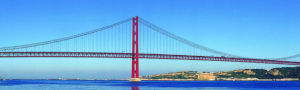
Guide to Lisbon
The capital of Portugal is located in Estremadura, Central region.Highlighted:
+ Old Lisbon
+ Lower Lisbon
+ Where to eat
+ Where to stay
+ Alfama
Find out more in the+ Lisbon Guide




What's New
When one thinks of Portugal, the images that come to mind are the Belém Tower, in Lisbon and, in the north of the country, the D. Luís Bridge, in the city of Porto.+ Lisbon
+ Porto
Other highlights:+ Cascais
+ Braga
+ Coimbra
+ V.N. de Gaia
+ Sintra
Check it out on Guide to Portugal!
Regions of Portugal
Guide to Portugal
Administrative division of the country
Mainland Portugal - The territory of Portugal, in the past was divided into provinces or natural regions.Lisbon and Porto
The two main urban agglomerations in the countryCurrently, it is divided into five major geographic regions and 18 districts (states in Brazil).
Portugal has 275 municipalities
In turn, the districts are composed of concelhos (municipalities), in a total of 275.

The Regions of Portugal
Continental Portugal
The 92,152 km² territory of Continental Portugal is divided into 5 major geographical regions:
1. Lisbon and Region
With 3,001 km² and just under three million inhabitants, the Lisbon Region comprises the Greater Lisbon and the Setúbal Peninsula.Main cities, besides Lisbon, the country's capital:
• Sintra
• Cascais
• Oeiras
2. Central Region
The second largest (27,136 km²), the Central Region is located between the capital and the north of Portugal.It is a region with beautiful landscapes (Serra da Estrela) and a diversity of centers of interest: nature, sea, gastronomy, history, historical villages and culture.
Two major tourist centers, in addition to Coimbra - the region's capital - famous for its old university center:
• Fatima: and its world-famous Sanctuary of Fatima
• Nazaré: charming village and its large waves, appreciated by surf lovers from all over Europe.
The main cities of the Central Region:
• Coimbra
• Aveiro
• Leiria
3. Northern Region
The Northern Region is the 3rd largest (21,286 km²) in the country, the birthplace of the nation with the County of Portucale. Other highlights include the gastronomy, the world-famous Port Wine and the vineyards of the Douro Vinhático, the first demarcated wine region in the world.Main cities of the Northern Region:
• Porto, a capital da região.
• Vila Nova de Gaia, famous for its Port wine cellars.
• Braga, known for being the oldest city in Portugal and the capital of Minho.
4. Alentejo
The Alentejo, located south of the Tagus River, is the largest region (31,711 km²).The Alentejo region, with its typical gastronomy, produces excellent wines and olive oils (the largest producing region in the country).
The main cities of Alentejo are:
• Évora, located in the heart of the region, the capital of the Alentejo, is a World Heritage city (UNESCO).
• Beja, famous for its Marble Castle and rich heritage; it is located in the south of the region.
• Elvas, well known and appreciated for its historical fortifications; a World Heritage city (UNESCO).
5. Algarve
With 4,960 km², the Algarve offers a diversity of landscapes and, above all, a coastline dotted with beautiful beaches.With almost 160 km of beaches, this is the preferred region for vacationers from all over Europe. Summer in the Algarve is a dream for many.
The main cities of the Algarve are:
• Faro, located in the heart of the coastal region, with the Barlavento to the west and the Sotavento to the east, extending to the border with Spain at Vila Real de Santo Antônio.
Faro is the capital of the Algarve, a city with an important regional airport, the Faro International Airport.
• Albufeira, famous for its beautiful beach, one of the favorites in the region.
• Portimão, the second most populous city, is very well known and appreciated for its famous Praia da Rocha beach, one of the country's most iconic landmarks.
The sardines of Portimão are renowned and appreciated beyond the borders of Portugal.
Portugal's Districts
Mainland Portugal - The territory of 92,152 km² of Portugal is divided into 5 major geographic regions (Lisbon and Region,
Center, North, Alentejo and Algarve),
and in 18 districts, with 275 municipalities (municipalities).
Insular Portugal - The archipelagos of Madeira and Azores are Autonomous Regions of Insular Portugal.
Follow the links below and have a nice visit!

Geographical regions
Lisbon
Center
North
Alentejo
Algarve (South)
RA Madeira
RA Azores
Natural Regions (Provinces)
Minho
Trás-os-Montes/Alto Douro
Douro Litoral
Beira Alta
Beira Baixa
Beira Litoral
Ribatejo
Extremadura
Alto Alentejo
Alentejo Central
Alentejo Litoral
Baixo Alentejo
Algarve
The Districts (States)
Important administrative division of the country, after the regions, the districts in turn are divided into municipalities (or counties). Municipalities, on the other hand, are divided into parishes. In translations into other languages, in general, the term civil parishes is used.Selection of Tourist Destinations
- Costa Vicentina
- Albufeira
- Vilamoura
- Cities of Historic Heritage
- Discovery of the Douro
- Monchique Spa and Thermal Baths